The 200 kWh Target: Energy, Mass and the Cells Underneath
Gross energy is the friendliest number in a battery specification. Usable energy, pack mass and cell chemistry are where a supercar is won or lost.
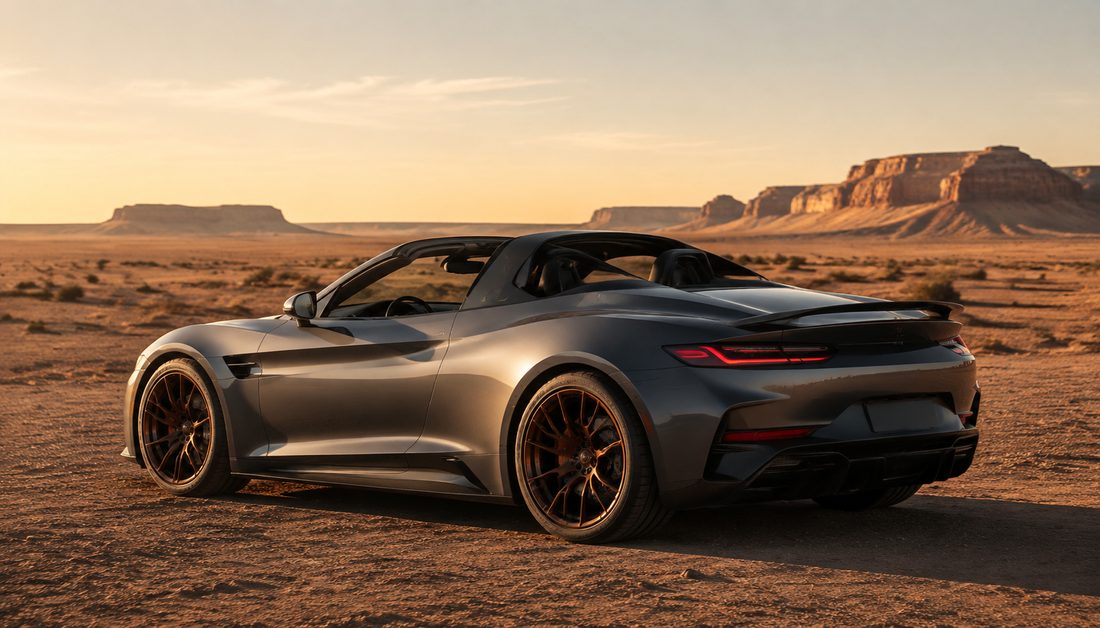
A battery headline mixes several quantities that are not interchangeable. Gross energy is not usable energy. A cell format is not a chemistry. A chemistry is not a warranted automotive system. Each step down that chain costs something, and the cost lands on mass, which is the one currency a supercar cannot borrow against.
The 200 kWh figure comes from the unveiling era and is absent from Tesla's current specification page. The 4680 expectation comes from other Tesla products and has never been stated for this car. Both are worth analysing; neither should be quoted as a Roadster specification.
What follows separates what the number would imply from what has actually been published about it.
How to read these claims
The Roadster is an upcoming vehicle, so its specifications come from several sources of very different weight. A manufacturer publication, a statement made at the 2017 unveiling, an executive remark, a feature visible on a show car and an engineering inference are not interchangeable, and this series keeps them labelled rather than blending them into one description.
Each claim below is given its evidence class, the physics or engineering it would depend on, the specifications that remain unpublished, and the test that would settle it. Where a number exists, its measurement boundary is stated: energy at the pack or at the charger, torque at the motor or at the wheel, range on a cycle or at a steady speed.
| Claim | Status | Strongest evidence |
|---|---|---|
| The 200 kWh Battery Target and Its Mass Budget | Unveil-era target; absent from the current Tesla specification page | Unveil-era evidence |
| 4680 Cells and Silicon Chemistry: An Unsupported Expectation | Speculation; no Tesla Roadster cell format is published | Inference and expectation |
Battery headlines mix quantities that are not interchangeable. Gross energy is not usable energy; peak charging power is not a charging curve; cell dimensions are not a pack; and a laboratory chemistry is not a warranted automotive system. Range, acceleration and charging also pull the design in different directions, because a large energy store helps range while low mass and high power help performance.
The 200 kWh Battery Target and Its Mass Budget
Unveil-era target; absent from the current Tesla specification page.
The source describes a dual-stacked 200 kWh pack as twice the capacity of a long-range EV.
The 2017 unveiling discussed a 200 kWh pack, while Tesla's current Roadster page publishes range rather than battery capacity. It does not identify pack construction, usable energy or cell format.
Energy capacity is only one dimension. Pack mass, cell-to-pack ratio, voltage, cooling, crash structure, floor height and usable state-of-charge window determine whether 200 kWh fits a low supercar without compromising handling or occupant space.
What remains unpublished. Gross versus usable capacity, chemistry, voltage, mass, module layout, cooling loops, charge curve and degradation warranty are all unpublished. ‘Dual stacked’ should not be treated as final architecture.
A fair test. Require certified curb mass, usable energy from full to indicated empty, pack drawings, repeatable thermal tests, charge/discharge limits and a warranty definition before comparing the Roadster by kWh alone.
4680 Cells and Silicon Chemistry: An Unsupported Expectation
Speculation; no Tesla Roadster cell format is published.
The source expects custom tabless 4680 cells with silicon-based chemistry and heavy-discharge cooling.
Tesla does not identify the next Roadster's cell size, supplier, anode chemistry, tab design or pack architecture on the current product page. The expectation should not be converted into a specification.
Cell format affects current path, thermal gradients, manufacturing and structural integration, while chemistry affects energy density, power, cycle life and swelling. A high-performance car may optimize differently from a high-volume vehicle even within one manufacturer.
What remains unpublished. Every material detail in the claim—4680, custom, tabless and silicon-based—remains unconfirmed for the Roadster, as do cooling method, cell count and serviceability.
A fair test. Treat cell identity as unknown until Tesla publishes homologation or service data. Evaluate the delivered pack through usable energy, power, temperature uniformity, degradation, charging curve and warranty rather than rumor about cylinder dimensions.
What this group of claims would cost the car
No feature lives alone. Additional battery energy affects mass, structure, cooling and charging. More downforce affects drag and range. A removable roof affects stiffness, sealing and storage. A pressure package affects seating, crash isolation, service and vehicle mass. Map each proposed benefit to what it consumes, and if a feature appears to produce a large benefit without consuming any currency, the missing cost is probably hidden in an unstated assumption.
The claims above were checked against Tesla Roadster product page and Tesla Semi and Roadster unveil, accessed August 31, 2026. A manufacturer page is a statement about an upcoming product, not independent certification, and the 2017 event documents reveal-era intent. Neither should be used to fill unpublished dimensions, materials, test conditions or production dates with assumptions.
Bottom line
Two hundred kilowatt-hours would be an extraordinary amount of energy to put in a two-door car, and the interesting consequence is not range - it is mass. Every kilogram of pack works against the acceleration, cornering and braking claims made elsewhere in the same specification.
The disclosure that would matter most is the least glamorous: usable energy, pack mass, and the warranty terms that say what the pack is still expected to do after several years of fast charging and repeated launches.