Three Motors, Ten Thousand Newton-Metres and the Control Problem
Motor count is the easiest powertrain fact to publish and the least informative. What matters is where the torque is measured and how well it is allocated.
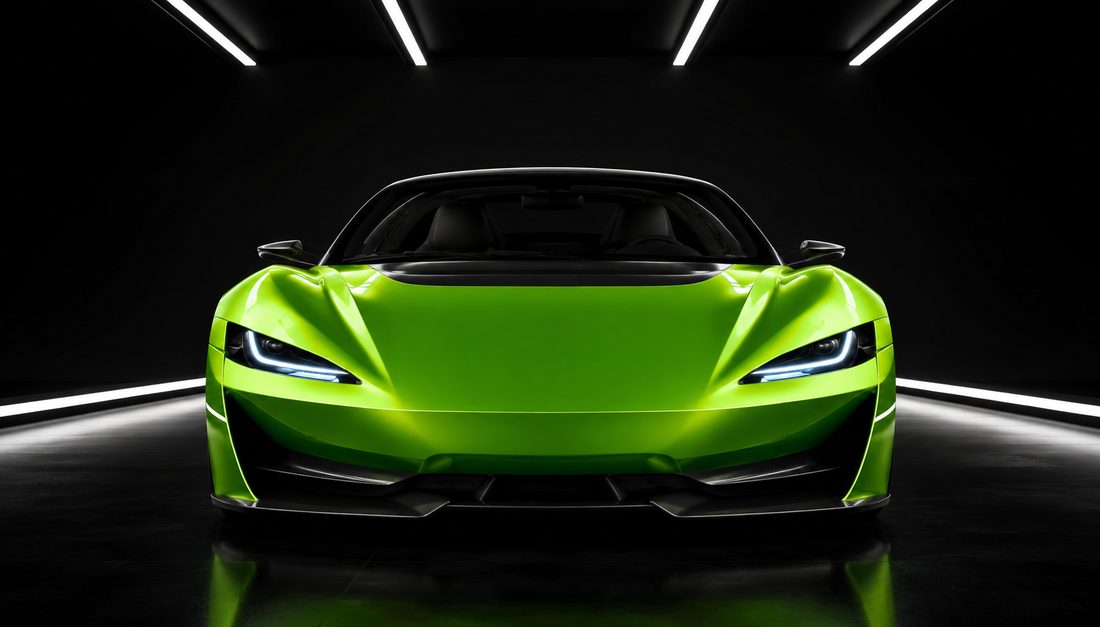
Electric powertrain specifications are unusually vulnerable to unit confusion. Motor torque becomes wheel torque through gearing. Battery power is reduced by electrical and mechanical losses. Maximum force at low speed is usually limited by the tyre or the control system rather than by the motor. A dramatic number can be accurate inside its boundary and misleading outside it.
Tesla's 10,000 N·m is a wheel figure, which is a legitimate way to quote torque and a terrible way to compare against a rival's engine output. Three drive units are a real architectural choice with real consequences. Advanced torque vectoring is a claim about software that no specification sheet can demonstrate.
Each section names the measurement point, because on this subject the measurement point is the argument.
How to read these claims
The Roadster is an upcoming vehicle, so its specifications come from several sources of very different weight. A manufacturer publication, a statement made at the 2017 unveiling, an executive remark, a feature visible on a show car and an engineering inference are not interchangeable, and this series keeps them labelled rather than blending them into one description.
Each claim below is given its evidence class, the physics or engineering it would depend on, the specifications that remain unpublished, and the test that would settle it. Where a number exists, its measurement boundary is stated: energy at the pack or at the charger, torque at the motor or at the wheel, range on a cycle or at a steady speed.
| Claim | Status | Strongest evidence |
|---|---|---|
| Tri-Motor Powertrain: What Three Motors Actually Enable | Unveil-era configuration; final production details unpublished | Unveil-era evidence |
| 10,000 Nm of Wheel Torque Needs the Gear Ratio Attached | Published Tesla headline; easy to misinterpret | Manufacturer publication |
| Advanced Torque Vectoring: Control Quality Beats Motor Count | Plausible capability; algorithm and performance are unpublished | Inference and expectation |
Control architecture matters as much as component count. Multiple drive units create options for traction and yaw control, but the vehicle still has to estimate available grip, coordinate regeneration and friction braking, protect components and stay predictable when a sensor or motor is limited. The accepted result is repeatable behaviour, not a diagram containing more motors.
Tri-Motor Powertrain: What Three Motors Actually Enable
Unveil-era configuration; final production details unpublished.
The source specifies one front motor and two rear motors in a Plaid-style layout.
The 2017 reveal described a three-motor arrangement, but Tesla's current product page does not provide motor count, type, power, gearing or inverter details.
Two independently driven rear wheels can provide direct rear-axle torque vectoring, while a front drive unit adds traction and regenerative capacity. The architecture also adds cooling demand, controls, inverters, mass and failure states. Motor count alone does not establish output or lap consistency.
What remains unpublished. Final motor topology, peak and continuous power, gear ratios, cooling, front/rear torque split, limp-home behavior and production name are not published.
A fair test. Validate repeated acceleration, sustained high-speed operation, track laps, thermal recovery and degraded operation. Publish power at the battery and wheels rather than inferring it from motor count.
10,000 Nm of Wheel Torque Needs the Gear Ratio Attached
Published Tesla headline; easy to misinterpret.
The source equates 10,000 Nm of wheel torque with 7,375 lb-ft available immediately from zero rpm.
Tesla's international Roadster specification table publishes 10,000 Nm of wheel torque. Wheel torque is after gear reduction and is not directly comparable with the motor-shaft torque figures commonly quoted for combustion engines.
Wheel torque divided by effective tire radius estimates tractive force before grip and control limits. Gearing can multiply motor torque while reducing wheel speed; the figure therefore needs gear ratio, tire radius, speed curve and power to become meaningful.
What remains unpublished. Tesla does not publish the torque-versus-speed curve, gear ratio, tire radius used for the headline, allocation by axle, duration or test method.
A fair test. Request dyno or instrumented acceleration data showing wheel torque over speed, battery power, tire specification, state of charge and thermal state. Compare tractive force and power, not isolated torque headlines.
Advanced Torque Vectoring: Control Quality Beats Motor Count
Plausible capability; algorithm and performance are unpublished.
The source says torque is redistributed to each rear wheel millisecond by millisecond for grip.
A two-rear-motor architecture can support independent rear-wheel torque control, but Tesla does not publish the Roadster's control frequency, sensors, yaw targets or demonstrated benefit.
Useful vectoring estimates tire capacity and requests yaw without making the car surprising. It must coordinate propulsion, regeneration, stability control, steering and any proposed thruster system. Fast updates are valuable only when the state estimate and actuator response are trustworthy.
What remains unpublished. Control-loop rate, sensor suite, differential wheel torque, driver modes, thermal derating and failure behavior remain unknown. ‘Millisecond-by-millisecond’ is descriptive, not a measured outcome.
A fair test. Use instrumented corner entry, power-on exit, split-friction launch and disturbance tests. Report sideslip, yaw error, steering correction, wheel slip, temperatures and transition behavior when one drive unit derates.
What this group of claims would cost the car
No feature lives alone. Additional battery energy affects mass, structure, cooling and charging. More downforce affects drag and range. A removable roof affects stiffness, sealing and storage. A pressure package affects seating, crash isolation, service and vehicle mass. Map each proposed benefit to what it consumes, and if a feature appears to produce a large benefit without consuming any currency, the missing cost is probably hidden in an unstated assumption.
The claims above were checked against Tesla Roadster product page and Tesla Semi and Roadster unveil, accessed August 31, 2026. A manufacturer page is a statement about an upcoming product, not independent certification, and the 2017 event documents reveal-era intent. Neither should be used to fill unpublished dimensions, materials, test conditions or production dates with assumptions.
Bottom line
The powertrain claims are the most credible in the Roadster set and the most often misread. Three motors and a large wheel torque figure are consistent with a fast car; neither tells you how the car behaves at the limit, in the wet, on the third lap, or with a drive unit derated.
Ask for the ratio behind the torque, the allocation strategy behind the vectoring, and the behaviour when one unit is unavailable. Those three answers would say more about the car than any peak figure.